חיידק הליסטריה מהווה איום מורכב בשל עמידותו בתנאי קירור. ניהול הסיכון מחייב תוכנית ניטור סביבתית מקיפה (EMP) ובדיקות מעבדה מהירות, המונעות זיהום צולב ומבטיחות שיווק רציף.
מאמר זה מבוסס על ה-Blue Paper של חברת Mérieux NutriSciences.
נכון לשנת 2024, המין ליסטריה (Listeria) כולל 28 זנים, לעומת שישה זנים בלבד שהיו מוכרים בשנת 2010. העלייה המשמעותית במספר הזנים נובעת מהתקדמות משמעותית בשיטות טקסונומיות וגנומיות. כיום, הזנים מחולקים לשתי קטגוריות עיקריות:
- קבוצת Listeria sensu stricto: קבוצה זו כוללת זנים הקרובים גנטית ל־Listeria monocytogenes, ומהווה קבוצה בעלת חשיבות סביבתית ובריאותית. זנים אלו נחשבים סמנים טובים לנוכחות הפתוגן L. monocytogenes בסביבה ובמפעלי מזון.
- קבוצת Listeria sensu lato: קבוצה זו כוללת 18 זנים הרחוקים גנטית מ־L. monocytogenes, כדוגמת Listeria grayi. הרלוונטיות של קבוצה זו לבריאות הציבור, וכן עצם הכללתה בתוך המין Listeria, עדיין אינה ברורה לחלוטין. חלק מהזנים בקבוצה זו אינם מציגים מאפיינים פנוטיפיים טיפוסיים למין, אינם גדלים בטמפרטורות קירור ועשויים להיות בעלי תנועה (motility).
הסכנה לבריאות הציבור ומחלת הליסטריוזיס
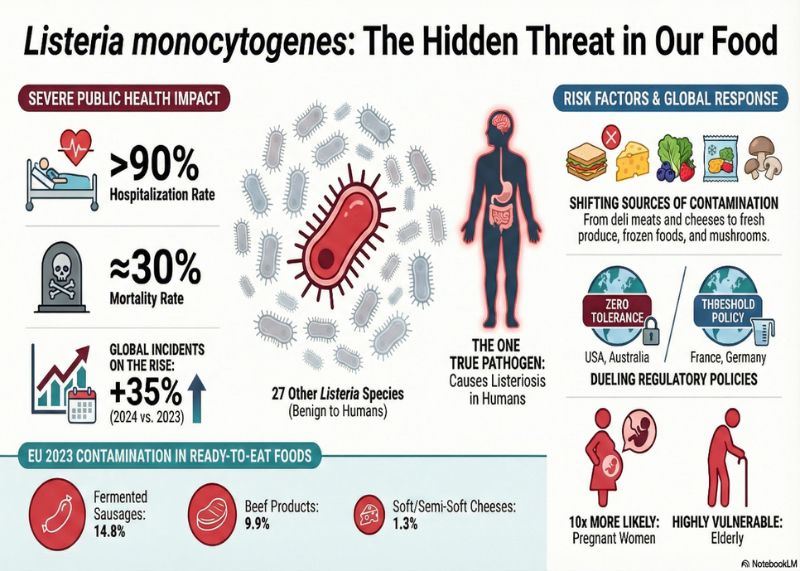
מבין 28 הזנים המוגדרים כיום במין Listeria, הזן היחיד המוכר כגורם סיכון לבריאות הציבור ולמחלת הליסטריוזיס הוא Listeria monocytogenes. המאפיינים של מחלת הליסטריוזיס כוללים:
- מחלה נדירה אך עלולה להיות חמורה, עם שיעורי אשפוז גבוהים מאוד של מעל 90%.
- שיעור תמותה גבוה של כ־30%.
- זוהי המחלה עם תקופת הדגירה הארוכה ביותר מבין מחלות המזון המיקרוביאליות.
- קבוצות הסיכון העיקריות הן בני 65 ומעלה, נשים בהריון ואנשים עם מערכת חיסון מוחלשת.
- נשים בהריון נמצאות בסיכון גבוה פי 10, עם סיכון ללידה מוקדמת ואף למוות עוברי.
מגמת ההידבקות בעולם עלתה משמעותית בשנים 2019–2023. בשנת 2022 דווח על 0.63 מקרים ל־100,000 נפש – הנתון הגבוה ביותר מאז 2007.
הישרדות חיידק הליסטריה ומקורות העברה במזון
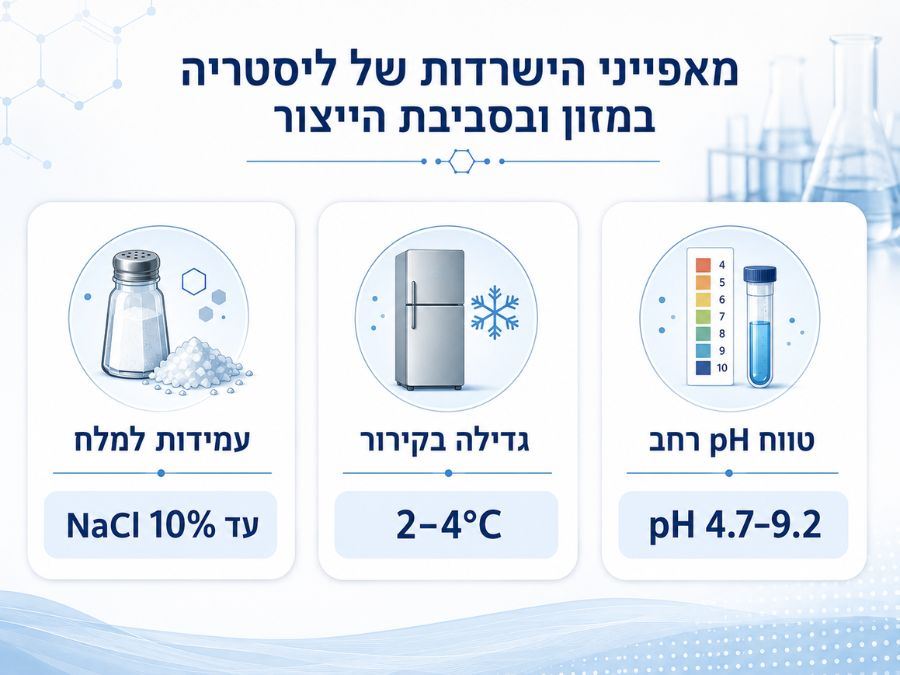
הגורמים המאפשרים לחיידקי Listeria לשרוד במזון ובסביבה הם ייחודיים ומאתגרים עבור תעשיית המזון:
- עמידות למלח – עד 10% NaCl.
- יכולת לגדול בקירור – בטמפרטורות של 2–4°C.
- יכולת לגדול בטווח pH רחב – בין 4.7 ל-9.2.
העברת הפתוגן מתרחשת כמעט תמיד באמצעות צריכת מזון מזוהם. בעוד שבעבר המקורות העיקריים היו מזונות מוכנים לאכילה המאוחסנים בקירור לאורך זמן, כגון נקניקים וגבינות, בשנים האחרונות ישנה עלייה בזיהומים הקשורים למזון קפוא, פירות וירקות טריים, עלים ירוקים ופטריות אנוקי. בשנת 2024, רשת Mérieux NutriSciences דיווחה על 1,366 אירועים בעולם הקשורים ל־Listeria monocytogenes, המהווים עלייה של 35.65% בהשוואה לשנת 2023.
רגולציה עולמית ובישראל
בשל מנת ההדבקה הגבוהה יחסית, מדינות שונות נוקטות בגישות רגולטוריות שונות:
- מדיניות סף (≤100 CFU/g עד סוף חיי מדף): נהוגה במדינות כמו צרפת, גרמניה והולנד.
- מדיניות אפס סובלנות (Zero Tolerance): נהוגה בארה״ב, אוסטריה, אוסטרליה, איטליה, וכן בישראל. במדינות אלו לא מותרת כל נוכחות של L. monocytogenes לאורך כל חיי המדף של המוצר.
כמו כן, בהתאם לתקנה האירופית (EC) 2073/2005, יצרנים נדרשים לעמוד בקריטריוני בטיחות מזון, לבצע מחקרי עמידות / חיי מדף עבור מזונות מוכנים לאכילה (RTE), ולבצע בדיקות Challenge.
פתרונות הבדיקה במעבדות מילודע
מרבית מערכות המעקב הרגולטוריות בעולם יישמו ריצוף גנומי מלא (WGS) לאיתור מקורות זיהום וקשר בין אירועים. בעת בחירת שיטת בדיקה מהירה, יש לבחון את רמת הוולידציה (Validation) והתאמתה לתקן ISO 16140.
במעבדות מילודע אנו מציעים מגוון רחב של בדיקות איכותיות וכמותיות עבור Listeria spp. ו־Listeria monocytogenes בשיטות קלאסיות ומהירות, למשטחים ולמזון:
- בדיקת Listeria spp מהירה בשיטת VIDAS – תוצאות תוך 24 שעות (משטחים ומזון).
- בדיקת Listeria monocytogenes מהירה בשיטת VIDAS – תוצאות תוך 48 שעות (משטחים ומזון).
- בדיקת Listeria spp מהירה בשיטת GENE UP (משטחים ומזון).
- בדיקת Listeria monocytogenes מהירה בשיטת GENE UP (משטחים ומזון).
- ליסטריה וליסטריה מונוציטוגנס כמותית בשיטת ISO (משטחים ומזון).
- ליסטריה וליסטריה מונוציטוגנס איכותית בשיטות ISO (משטחים ומזון).
למעבדות מילודע ישנן ואלידציות של קבוצת MXNS לרוב מוצרי המזון, וניתן לבצע ואלידציה מותאמת גם למזונות חדשים. כמו כן, המעבדה מבצעת מחקרים לבדיקת התמיכה בגידול של חיידק ליסטריה בהתאם לתקנים בינלאומיים שונים.
מקורות ורפרנסים למאמר
להלן רשימת המקורות שעליהם מבוסס המאמר:
- EFSA, 'Factsheet: Listeria', February 2014.
- Orsi, RH & Wiedmann, M., 'Characteristics and distribution of Listeria spp., including Listeria species newly described since 2009', April 2016.
- Carlin, Catharine R., Jingqiu Liao, Lauren K. Hudson, Tracey L. Peters, Thomas G. Denes, Renato H. Orsi, Xiaodong Guo, and Martin Wiedmann. "Soil collected in the Great Smoky Mountains National Park yielded a novel Listeria sensu stricto species, L. swaminathanii." April 2022.
- Orsi, Renato H., Jingqiu Liao, Catharine R. Carlin, and Martin Wiedmann. "Taxonomy, ecology, and relevance to food safety of the genus Listeria with a particular consideration of new Listeria species described between 2010 and 2022." January 2024.
- Food and Agriculture Organization (FAO). Regulation and Trade.
- EFSA, 'The European Union One Health 2022 Zoonoses Report', November 2023.
- EFSA, Listeria monocytogenes story map, 2022.
- US Food and Drug Administration (FDA) Recalls, Market Withdrawals, Safety Alerts.
- US Department of Agriculture (USDA) Recalls and Public Health Alerts.
- Government of Canada Recalls and Safety Alerts.
- Food Standards Australia New Zealand. Imported food risk statement. Enoki mushrooms and Listeria monocytogenes.
- Centers for Disease Control and Prevention (CDC) Foodborne Germs and Illnesses.
- ANSES, 'Data sheet on foodborne biological hazards / Listeria monocytogenes', December 2011.
- ANSES, 'Listeriosis: Disease, responsible agent and role of ANSES', August 2016.
- EURL Lm TECHNICAL GUIDANCE DOCUMENT for conducting shelf-life studies on Listeria monocytogenes in ready-to-eat foods.
- EFSA, Scientific Opinion: The public health risk posed by Listeria monocytogenes in frozen fruit and vegetables including herbs, blanched during processing, March 2020.
- EURL Lm TECHNICAL GUIDANCE DOCUMENT on sampling the food processing area and equipment for the detection of Listeria monocytogenes Version 4, 3 October 2023.
- DGAL Guide to managing food-borne alerts for food business operators and the authorities DGAL/MUS/2023-11, January 2023.
- US Food Safety Modernization Act.
- US FDA Draft Guidance. Control of Listeria monocytogenes in Ready-to-Eat Foods. January 2017.
- GB 31639-2023 National Food Safety Standard: Microbial preparations for food processing – Release Date: 2023.09.06 – Implementation Date: 2024.09.06 – Limitation Not detectable/25g (mL) – Test Method: GB4789.30.
- GB 19303-2023 National Food Safety Standard – Hygienic Specification for the Production of Cooked Meat Products – Release Date 2023.09.06 – Implementation Date: 2024.09.06.
- Journal officiel Lois et Décrets, 'n°0253: Loi 2018-938 – commercial relations dans le sector agricole et alimentaire et une alimentation saine, durable et accessible à tous', November 2018.
- European Commission, 'Commission regulation (EU) 2019/229 amending (EC) 2073/2005 on microbiological criteria in foodstuffs', February 2019.
- European Commission, 'Commission regulation (EU) 2020/205 amending (EC) 2073/2005 on microbiological criteria in foodstuffs', February 2020.
- EURL Lm TECHNICAL GUIDANCE DOCUMENT on challenge test and durability studies for assessing shelf-life of ready-to-eat foods related to Listeria monocytogenes. July 2021.
- 'GB 29921-2021 National Food Safety Standard Limits of Pathogenic Bacteria in Prepackaged Foods', 2021 (CHINESE).
- CFIC, 'Specification for contamination control of Listeria monocytogenes in ready-to-eat foods (DRAFT)', 2022 (CHINESE).
- ISO, 'ISO 11290-1:2017: Microbiology of the food chain – Horizontal method for the detection and enumeration of Lm and of Listeria spp. – Part 1: Detection method', May 2017.
- ISO, 'ISO 11290-2:2017: Microbiology of the food chain – Horizontal method for the detection and enumeration of Lm and of Listeria spp. – Part 2: Enumeration method', May 2017.
- US FDA BAM Chapter 10 – Detection of Listeria monocytogenes in Foods and Environmental Samples, and Enumeration of Listeria monocytogenes in Foods.
- USDA MLG 8.13 – Isolation and Identification of Listeria monocytogenes from Ready-to-eat Meat, Poultry, Siluriformes (Fish), Egg Products, and Environmental Samples.
- Health Canada Compendium of Analytical Methods MFHPB 30: Isolation of Listeria monocytogenes and other Listeria spp. from foods and environmental samples.
- AOAC International Official Methods of Analysis.
- AOAC Performance Tested Methods.
- AFNOR, 'Domaine agroalimentaire: Listeria spp., Listeria monocytogenes'.
- MicroVal issues certificates for alternative methods (ISO 16140-2:2016) and confirmation methods (ISO 16140-6:2019).
- NorVal International.
- 'GB 4789.30-2016 National Food Safety Standard—Food Microbiology Inspection—Listeria Monocytogenes Inspection', 2016.
- 'GB/T 22429-2008 Rapid screening for Salmonella, Escherichia coli O157 and Listeria monocytogenes in foods – Enzyme-linked immunoassay method', 2008.
- 'SN/T 2552.12-2010 Microbiological examination for milk and milk products hygiene – Part 12: Detection and enumeration of Listeria monocytogenes', 2010.
- 'SN/T 0184.3-2008 Determination of Listeria monocytogenes in food for import and export – Part 3: immuno-magnetic beads assay', 2008.
- European Commission, 'RASFF – Food and Feed Safety Alerts', Specific analysis by Mérieux NutriSciences (Safety HUD). Specific analysis for world's data in 58 countries.
- Prolonged multi-country outbreak of Listeria monocytogenes ST1607 linked to smoked salmon products.
- Outbreak Investigation of Listeria monocytogenes: Queso Fresco and Cotija Cheese (February 2024).
- Listeria Outbreak Linked to Peaches, Nectarines, and Plums – 2024.
- Listeria Outbreak Linked to Ice Cream – 2023.
- Listeria Outbreak Linked to Leafy Greens - 2023.
- French Technical Instruction DGAL/SDSSA/2023-27.
- Commission Regulation (EU) 2024/2895 of 20 November 2024 amending Regulation (EC) No 2073/2005 as regards Listeria monocytogenes.